What Is Asphalt Milling?
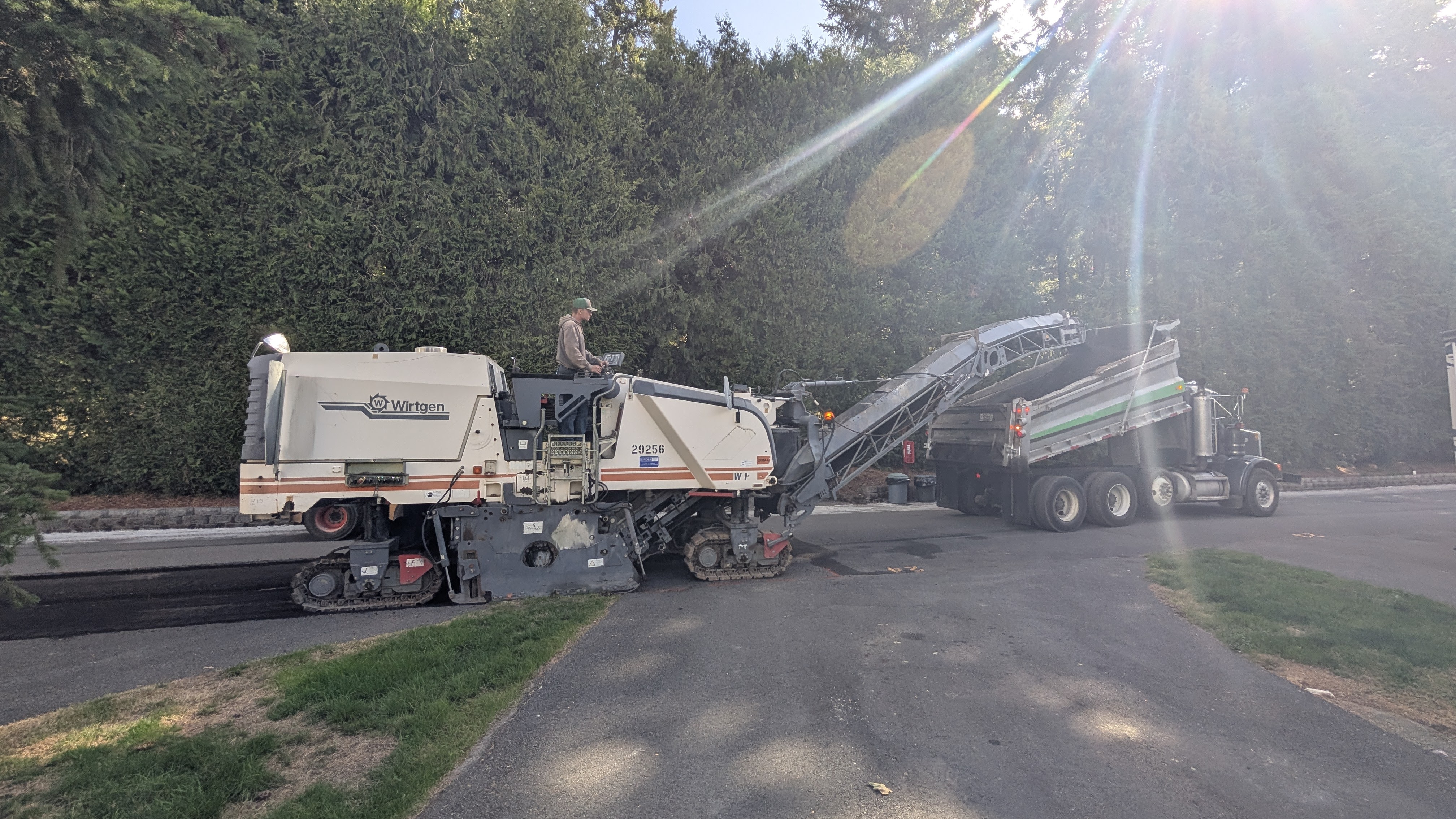
Asphalt milling — also called cold milling or asphalt grinding — is the controlled removal of the top layer of an existing asphalt surface using a specialized milling machine. The machine's rotating drum, lined with hardened carbide cutting teeth, grinds through the pavement at a precisely set depth, leaving behind a textured, uniform surface that bonds readily to new asphalt.
The removed material — known as reclaimed asphalt pavement (RAP) — is not wasted. RAP is loaded directly into trucks on site and transported to an asphalt plant where it's processed and reintroduced into new pavement mixes. Milling is one of the most sustainable practices in the paving industry, keeping old asphalt out of landfills and reducing the demand for virgin aggregate and liquid asphalt.

When Is Asphalt Milling the Right Choice?
Milling is not always the answer — but when the structural base is sound and only the surface layer has failed, it is typically the most cost-effective path to a quality resurfacing. Common scenarios where milling makes sense include:
- Surface distress without base failure — longitudinal cracking, transverse cracking, surface raveling, or moderate rutting that hasn't penetrated to the base
- Overlay preparation — existing asphalt is too high relative to curbs, drains, or building thresholds, and the surface must be lowered before a new wearing course is installed
- Drainage correction — ponding water or improper cross-slope can be corrected by milling to a new grade before overlay
- Removing failed surface patches — multiple previous patch repairs have created an uneven surface profile that needs to be planed smooth
- Pre-repaving preparation — the existing surface must be removed before a fresh structural section is installed
If the base course has failed — evidenced by alligator cracking that flexes underfoot, significant depressions, or soft spots — milling alone won't solve the problem. In those cases, full-depth removal and reconstruction is required. We will evaluate your pavement during our free site visit and give you a straightforward recommendation.
Our Milling Process
Step 1: Site Assessment
We walk the entire area, probe for soft spots, check existing grades and drainage, and evaluate the depth and character of surface distress. We identify any utility covers, drain grates, or obstacles that require attention before the milling machine moves in. You'll receive a clear scope of work and written quote before any work begins.
Step 2: Milling Machine Setup & Depth Configuration
The milling machine is calibrated to the required cut depth — typically 1.5 to 2 inches for standard overlay preparation, though this varies by project. Grade sensors allow the machine to follow existing contours or cut to a new slope. Utility covers and drain grates are carefully avoided or removed and reset as needed.
Step 3: Cold Milling
The machine makes systematic passes across the surface, grinding asphalt to the specified depth. A conveyor belt loads the milled RAP directly into haul trucks running alongside the machine, keeping the work area clear. The result is a profiled, striated surface with good texture — ideal for bonding with new asphalt overlay.
Step 4: Edge & Detail Work
Edges along curbs, buildings, and other fixed features are addressed with smaller equipment or hand work to ensure the entire milled area is consistent. Transitions are feathered where the milled section meets existing pavement that will remain.
Step 5: Cleanup & Inspection
The milled surface is blown clean, loose fines are swept, and the area is inspected for any anomalies. If base repairs are identified during milling, we flag them and discuss options before proceeding to overlay. The site is left clean and ready for the next phase of work.
Asphalt Milling for Parking Lots
Parking lots are the most common application for commercial milling work. Over time, asphalt surfaces oxidize, lose flexibility, and develop surface cracking. Milling removes the failed wearing course and restores a consistent grade — setting the stage for a new overlay that will look and perform like new pavement at a fraction of full reconstruction cost.
We regularly work with property managers, HOAs, and commercial owners across King County and Snohomish County to plan phased milling and overlay projects that minimize parking disruption. We can section work into manageable phases and coordinate around your tenants' and customers' schedules.
Milling for Grade & Drainage Correction
One of the most technically precise applications of milling is correcting drainage problems. If water ponds on your parking lot or driveway, the root cause is often an improper cross-slope or low spots that have developed as the pavement has settled. A milling machine equipped with grade-control sensors can cut a new slope across the surface — removing just enough material in the right places to restore positive drainage — before a new overlay is placed.
This approach avoids the need to build up material with thick overlay in high areas, which would create conflicts with curbs and drains. It is the most precise and cost-effective tool for drainage correction short of full reconstruction.
Benefits of Asphalt Milling
- Cost savings over full tearout — removing only the surface layer, rather than the entire pavement section, dramatically reduces disposal and material costs
- Recycled material (RAP) — milled asphalt is 100% recyclable and has real value as a recycled material, keeping waste out of landfills
- Precise depth control — modern milling machines hold depth tolerances tight enough to work around existing curbs, drains, and thresholds without requiring costly adjustments
- Improved overlay bonding — the striated, textured surface left by milling provides significantly better mechanical bond for new asphalt than a smooth old surface
- Faster project completion — milling and overlay is generally faster to execute than full reconstruction, minimizing downtime for your property
- Grade and drainage flexibility — the milling cut can follow a new slope, correcting drainage issues that existed in the original pavement
Service Areas for Asphalt Milling
We provide asphalt milling services throughout Western Washington including King County, Snohomish County, and Pierce County. We serve Woodinville, Kirkland, Redmond, Bellevue, Bothell, Kenmore, Sammamish, Issaquah, Renton, Auburn, Kent, Federal Way, Tukwila, Burien, Shoreline, Seattle, Mercer Island, Everett, Lynnwood, Mukilteo, Mill Creek, Edmonds, Mountlake Terrace, Marysville, Monroe, Duvall, and Snoqualmie. Call us to confirm service availability for your location.
Common Questions
Asphalt Milling FAQ
What is asphalt milling?
When should I mill my asphalt instead of doing a full replacement?
How thick of a cut can a milling machine make?
Does milled pavement need to be repaved immediately?
Ready to Resurface? Start with a Free Milling Estimate
We serve parking lots, driveways, and access roads throughout Western Washington. We'll assess your pavement and tell you exactly what it needs.
Request Your Free Estimate